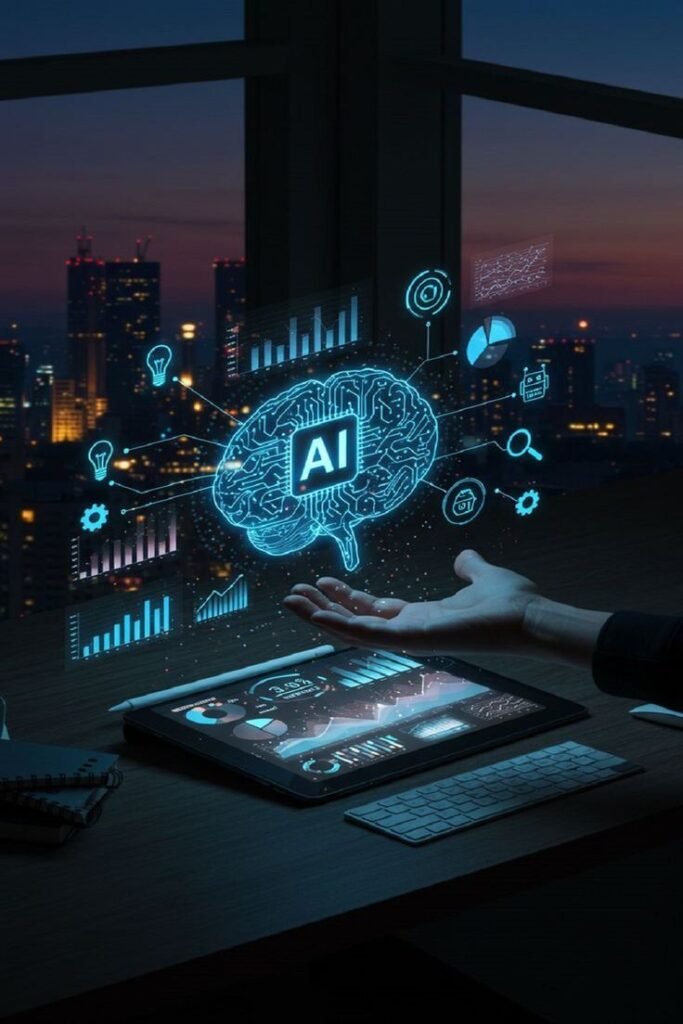
Artificial Intelligence (AI) is no longer a futuristic concept—it is transforming industries across the globe, and digital marketing is at the center of this revolution. From personalized customer experiences to automated campaigns and predictive analytics, AI is changing how businesses connect with their audiences.
As consumer behavior evolves and competition increases, businesses that embrace AI-powered marketing strategies are gaining a significant advantage. The age of Artificial Intelligence is not replacing marketers; instead, it is empowering them to work smarter, make better decisions, and deliver more value to customers.
The AI Revolution in Digital Marketing
Traditional digital marketing relied heavily on manual processes such as keyword research, content planning, audience segmentation, and campaign optimization. While these methods are still important, AI technologies are making these tasks faster, more accurate, and more efficient.
Modern marketing platforms can now analyze vast amounts of data in seconds, identify patterns, predict customer behavior, and automate complex tasks that once required large teams and significant resources.
This transformation is redefining the future of marketing.
Why Artificial Intelligence Matters in Marketing
Consumers expect personalized experiences, instant responses, and relevant recommendations. AI enables businesses to meet these expectations by understanding customer preferences and delivering customized interactions at scale.
Businesses using AI can:
- Improve customer experiences
- Increase marketing efficiency
- Reduce operational costs
- Generate better leads
- Improve conversion rates
- Make data-driven decisions
AI allows businesses to market smarter rather than simply spending more.
Major Ways AI is Transforming Digital Marketing
1. Personalized Customer Experiences
Personalization has become one of the most important factors in customer satisfaction.
AI analyzes customer behavior, browsing history, purchase patterns, and preferences to deliver personalized recommendations and content.
Examples include:
- Product recommendations
- Personalized email campaigns
- Dynamic website content
- Customized advertisements
Consumers are more likely to engage with brands that understand their needs.
2. AI-Powered Content Creation
Content remains the foundation of digital marketing, but AI is changing how content is created and optimized.
AI tools assist marketers by:
- Generating content ideas
- Creating outlines
- Optimizing headlines
- Improving readability
- Suggesting keywords
While human creativity remains essential, AI significantly improves productivity and efficiency.
3. Smarter Search Engine Optimization (SEO)
SEO is evolving rapidly due to AI-driven search experiences.
Search engines now prioritize:
- User intent
- Content quality
- Contextual relevance
- Expertise and authority
Businesses must optimize content for natural language queries and conversational search rather than relying solely on traditional keywords.
4. The Emergence of AI Search and GEO
Consumers increasingly use AI assistants to find information instead of traditional search engines.
This shift has introduced a new concept called Generative Engine Optimization (GEO), which focuses on improving visibility in AI-generated responses.
Businesses now need strategies for both:
- Traditional SEO
- AI Search Optimization
The future of search is becoming conversational.
5. Marketing Automation
AI enables businesses to automate repetitive marketing tasks such as:
- Email sequences
- Lead nurturing
- Social media scheduling
- Customer segmentation
- Campaign reporting
Automation saves time while improving consistency and efficiency.
6. Predictive Analytics
One of AI’s most powerful capabilities is predicting future customer behavior.
AI can analyze historical data to forecast:
- Customer purchasing patterns
- Campaign performance
- Product demand
- Churn probability
Predictive analytics helps businesses make proactive decisions rather than reactive ones.
7. AI Chatbots and Virtual Assistants
Modern customers expect immediate responses.
AI-powered chatbots provide:
- 24/7 customer support
- Instant answers
- Lead qualification
- Appointment scheduling
- Product recommendations
These tools improve customer satisfaction while reducing operational costs.
8. Smarter Advertising Campaigns
Advertising platforms increasingly use AI to optimize campaign performance automatically.
AI helps advertisers by:
- Identifying ideal audiences
- Adjusting bids automatically
- Optimizing budgets
- Testing creative variations
- Improving return on investment
This allows businesses to achieve better results with lower advertising costs.
9. Voice Search Optimization
Voice assistants are changing how users search online.
Consumers now ask questions naturally, such as:
- “What is the best digital marketing agency near me?”
- “How can I improve my website rankings?”
- “Which CRM software is best for small businesses?”
Businesses must optimize content for conversational queries and long-tail keywords.
10. Advanced Customer Insights
AI can analyze customer data from multiple sources and uncover valuable insights that humans might miss.
Businesses can better understand:
- Customer preferences
- Buying behavior
- Market trends
- Audience segments
These insights lead to more effective marketing strategies.
Challenges of AI in Digital Marketing
Although AI offers tremendous opportunities, businesses also face challenges.
Data Privacy Concerns
Customers expect businesses to protect their personal information and use data responsibly.
Over-Automation Risks
Automation should support human creativity rather than replace it completely.
Maintaining Authenticity
Consumers still value genuine human connections and authentic brand communication.
The most successful businesses will combine AI efficiency with human creativity and empathy.
The Future of AI-Powered Marketing
The future of digital marketing will likely include:
- Hyper-personalized experiences
- AI-generated content optimization
- Predictive customer journeys
- Advanced conversational marketing
- Fully automated campaign management
- Intelligent customer service systems
Businesses that embrace these innovations early will have a significant competitive advantage.
How Businesses Can Prepare
To succeed in the AI era, businesses should:
- Invest in AI-powered marketing tools.
- Continue creating high-quality content.
- Focus on customer experience.
- Optimize for conversational search.
- Train teams to work alongside AI technologies.
- Use data ethically and responsibly.
Adaptability will become one of the most valuable business skills in the coming years.
Conclusion
Artificial Intelligence is fundamentally changing the digital marketing landscape. From personalization and automation to AI search and predictive analytics, businesses now have access to tools that were unimaginable just a few years ago.
The future of digital marketing belongs to businesses that embrace innovation while maintaining authenticity and human connection.
AI is not replacing marketers.
It is creating smarter marketers, better customer experiences, and more effective business growth strategies.
The companies that learn to combine human creativity with artificial intelligence will define the next generation of digital marketing success.